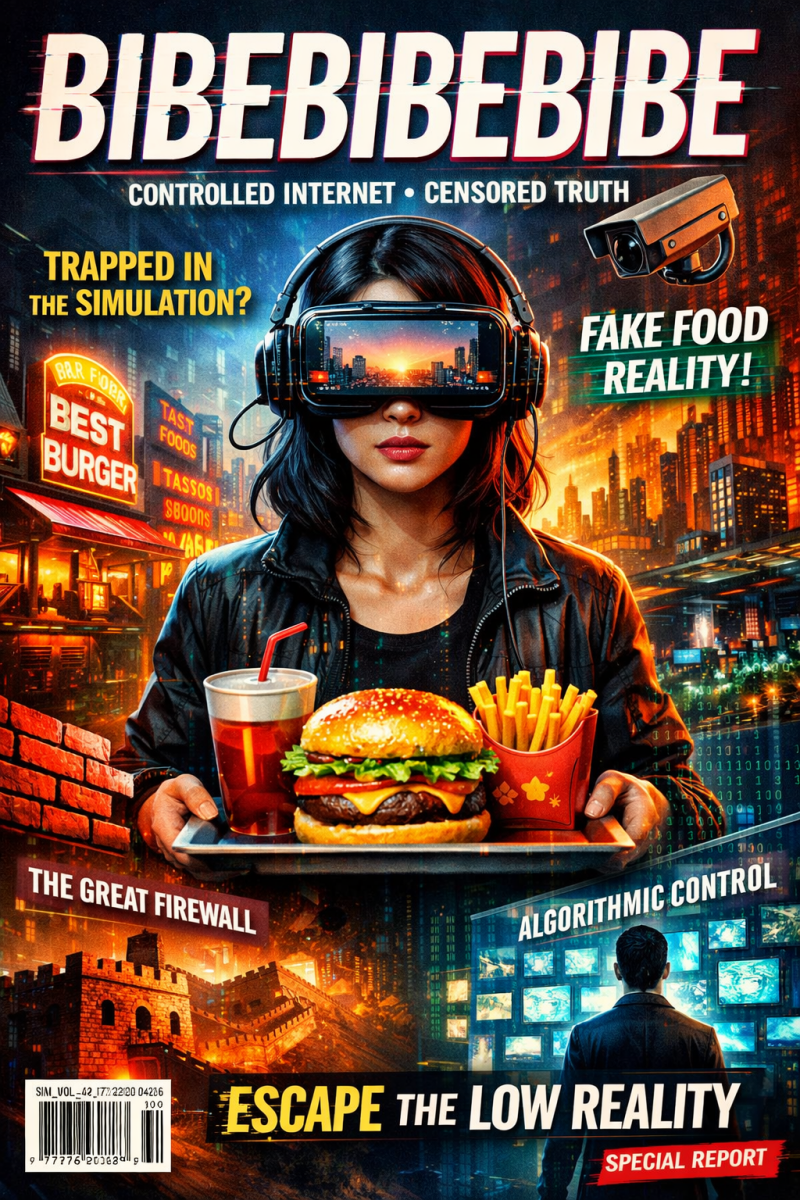
Bibebibebibe Magazine
Introduction
The concept of low reality levels describes environments where perception is curated, filtered, and controlled, leaving individuals with only partial access to truth. This resonates with ideas of simulation and hyperreality, manifesting in censorship, marketing, and artificial food economies.
Philosophical Foundations
Plato’s Cave: Citizens confined to curated systems mistake filtered content for reality, just as prisoners mistake shadows for truth.
Baudrillard’s Hyperreality: Signs and representations replace reality itself. Advertising becomes more “real” than the product.
Simulation Theory: Governments and corporations simulate reality by controlling perception, echoing the logic of programmed worlds.
Real-World Manifestations
Internet Filtering: China’s Great Firewall and U.S. algorithmic curation both simulate reality by presenting only fragments.
Food Systems: Processed foods marketed as “premium” replace nutritional reality with a simulation of excellence.
Cultural Narratives: Nations advertise themselves as pinnacles of freedom or prosperity, concealing systemic flaws.
The Danger
Living in low reality levels means existing in a social simulation. Health, intellect, and culture degrade when illusions are mistaken for truth.
Conclusion
Low reality levels show how societies simulate reality without advanced technology. Escaping requires exposure to alternative systems—through travel, education, or critical inquiry—that reveal higher truths beyond the curated frame.
Certified & Founded by
Dr. Melvin Sewell, M.Sc., Ph.D.
Academic Dean & Diagnostic Architect

Add comment
Comments